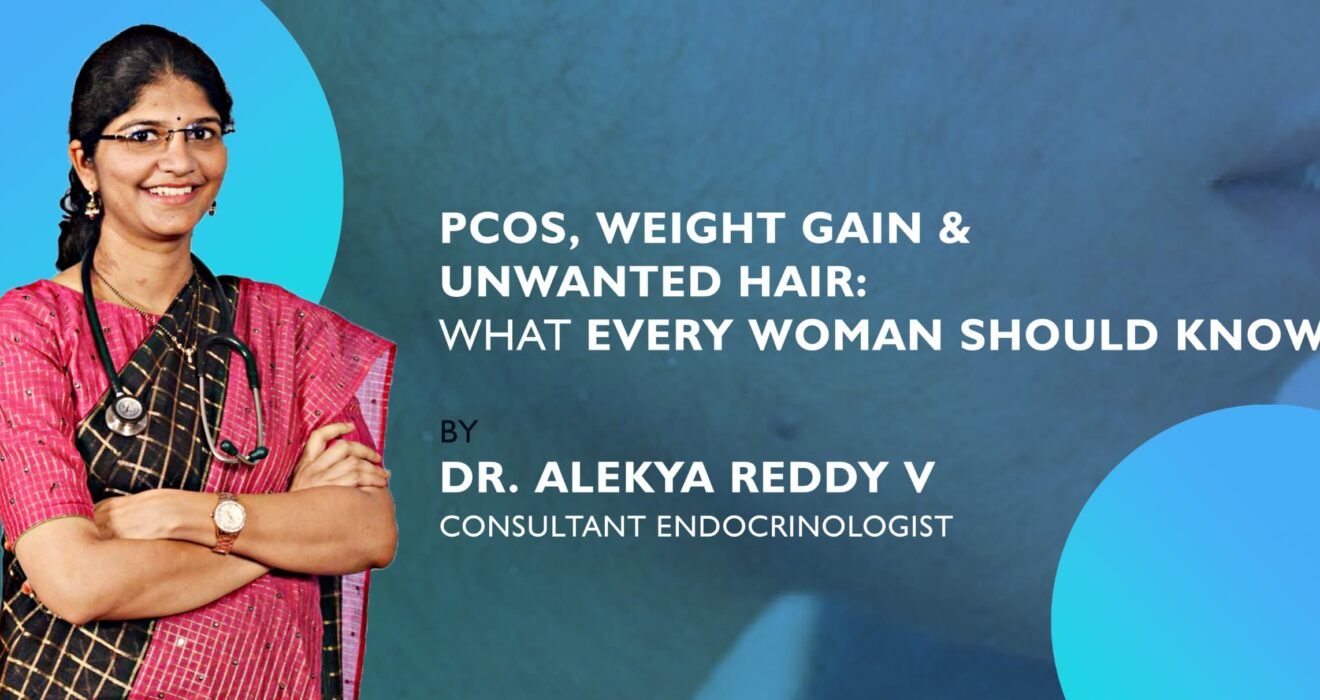
PCOS, Weight Gain & Unwanted Hair: What Every Woman Should Know
PCOS, Weight Gain & Unwanted Hair: What Every Woman Should Know
By Dr. Alekya Reddy V – Consultant Endocrinologist
Sridhaa Heart & Endocrine Super Specialty Clinic, Hasthinapuram, Hyderabad
Introduction
If you’ve been struggling with unexplained weight gain, irregular periods, or unwanted facial hair, you’re not alone. These are common symptoms of a hormonal condition called Polycystic Ovary Syndrome (PCOS)—one of the most underdiagnosed endocrine disorders among women today.
At Sridhaa Heart & Endocrine Super Specialty Clinic, we frequently see women facing physical, emotional, and metabolic challenges due to PCOS. This blog is a complete guide to help you understand what PCOS really is, how it affects your body, and what you can do to take back control.
What Is PCOS?
Polycystic Ovary Syndrome (PCOS) is a hormonal imbalance that affects how the ovaries work. It’s characterized by three main features:
- Irregular or absent menstrual cycles
- Excess androgen (male hormone) levels
- Polycystic ovaries seen on ultrasound (small fluid-filled sacs)
However, you don’t need all three features to be diagnosed with PCOS. Many women experience symptoms without showing polycystic ovaries.
Why Does PCOS Cause Weight Gain?
One of the key drivers of PCOS is insulin resistance, a condition where your body doesn’t respond to insulin effectively. This leads to:
- Increased fat storage (especially around the abdomen)
- Cravings for carbohydrates and sugar
- Difficulty losing weight despite efforts
Even thin women with PCOS can experience metabolic issues and abdominal fat.
Unwanted Hair Growth:
A Sign of Hormonal Imbalance
Excessive hair growth, known as hirsutism, is one of the most emotionally distressing symptoms of PCOS. It commonly affects the:
- Upper lip and chin
- Chest
- Stomach
- Thighs
This happens due to increased androgen (male hormone) levels, especially testosterone. These androgens overstimulate hair follicles, leading to thick, coarse hair growth in unwanted areas.
Other Common PCOS Symptoms Include:
- Acne and oily skin
- Hair thinning or male-pattern baldness
- Irregular or missed periods
- Difficulty getting pregnant (infertility)
- Mood swings or anxiety
- Dark patches of skin (acanthosis nigricans)
- Long-Term Health Risks of PCOS
Untreated or poorly managed PCOS can lead to several serious health conditions over time:
- Type 2 Diabetes
- High cholesterol
- High blood pressure
- Sleep apnea
- Infertility
- Endometrial cancer (due to irregular periods)
That’s why early diagnosis and regular monitoring with a qualified endocrinologist are crucial.
How Dr. Alekya Reddy V Approaches PCOS Treatment
At Sridhaa Clinic, we offer a personalized and comprehensive approach to managing PCOS, focusing on:
✅ Detailed Hormonal Evaluation
Blood tests to assess insulin resistance, androgens, thyroid function, and more.
✅ Menstrual & Reproductive Health Support
Restoring regular cycles, managing fertility, and preventing complications.
✅ Weight Management Plans
Nutrition and lifestyle counseling tailored to PCOS and insulin resistance.
✅ Cosmetic Symptom Relief
Treatment plans for acne, hair growth, and skin issues.
✅ Emotional Wellness
Counseling and stress management techniques to address anxiety and depression linked to PCOS.
How to Manage PCOS Naturally
While medical support is essential, lifestyle plays a powerful role. Here’s what every woman with PCOS should consider:
- Eat a low-GI diet rich in fiber, lean protein, and healthy fats
- Exercise regularly, especially strength training and cardio
- Prioritize sleep and stress reduction
- Limit processed foods and sugary drinks
- Avoid smoking and alcohol
- Even a 5–10% reduction in body weight can significantly improve symptoms and restore hormone balance.
Myths About PCOS – Busted!
❌ “You can’t get pregnant with PCOS.”
✅ Many women conceive naturally or with minimal help when their PCOS is managed.
❌ “You only have PCOS if you have cysts on your ovaries.”
✅ PCOS diagnosis is based on a combination of symptoms—not just ultrasound findings.
❌ “It only affects overweight women.”
✅ PCOS can affect women of all sizes, including those with normal BMI.
When Should You See an Endocrinologist?
If you’re experiencing any of the following, consult a specialist:
- Irregular periods or no periods
- Difficulty losing weight despite a healthy lifestyle
- Unwanted facial/body hair or severe acne
- Fatigue, mood swings, or trouble conceiving
At Sridhaa Heart & Endocrine Super Specialty Clinic, Dr. Alekya Reddy V offers evidence-based and compassionate care tailored to each woman’s unique hormonal needs.
Visit Us for Expert PCOS Management:
Sridhaa Heart & Endocrine Super Specialty Clinic
📍 Address: Plot No. 230, 2nd Floor, Nagarjuna Colony
Landmark: Beside Baker Q, Nagarjuna Sagar Rd, Hasthinapuram South, Hyderabad, Telangana – 500070
📞 Phone: 088976 87373